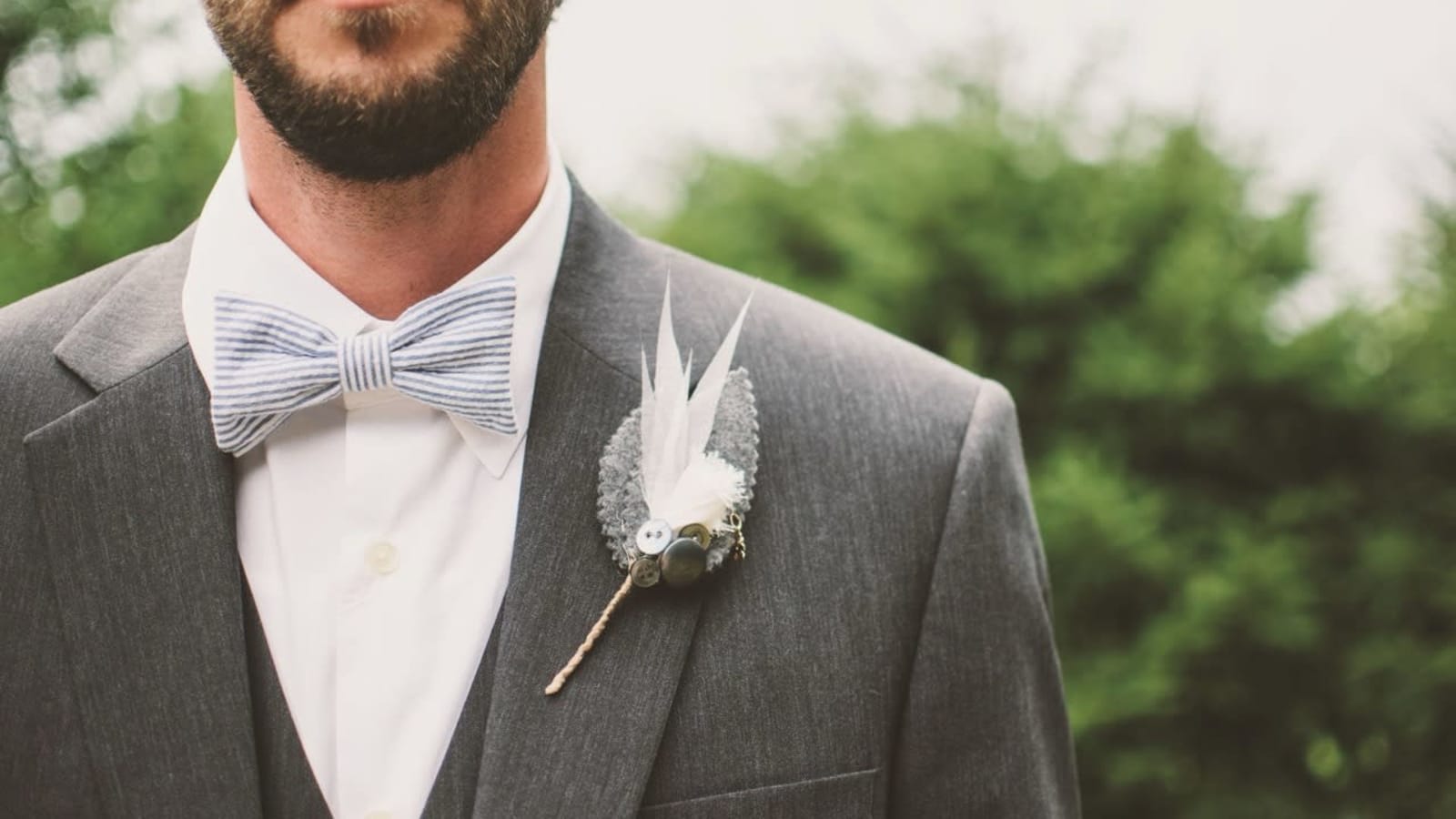
Top 10 Men's Wedding Bow Ties: Colours, Fabrics and How to Wear Them
The bow tie is the smallest thing a groom wears and the one closest to his face in every photograph. It is also the cheapest way to change the entire character of a suit, which makes it the most efficient decision in menswear.
Here are ten wedding bow tie looks, what each one says, and the practical guidance on fabric, colour and tying that most guides leave out.
1. Timeless Black and White
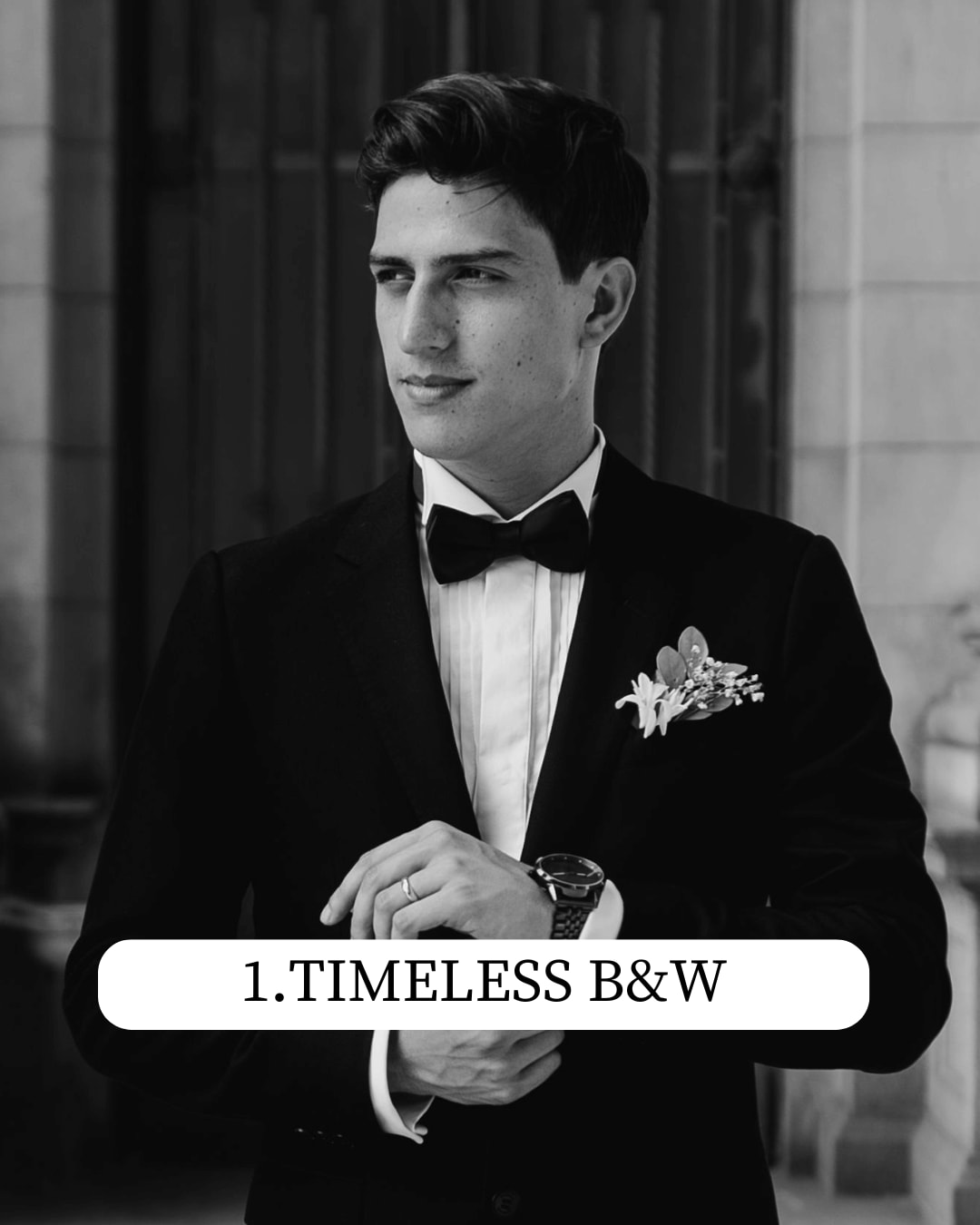
A black silk bow tie with a pleated white shirt. This is the original and the standard against which everything else is measured. It never dates, it suits every face, and it is the only correct answer when the invitation says black tie.
Wear with: black or midnight navy tuxedo, white boutonniere, black patent or polished leather shoes.
2. Chocolate Brown
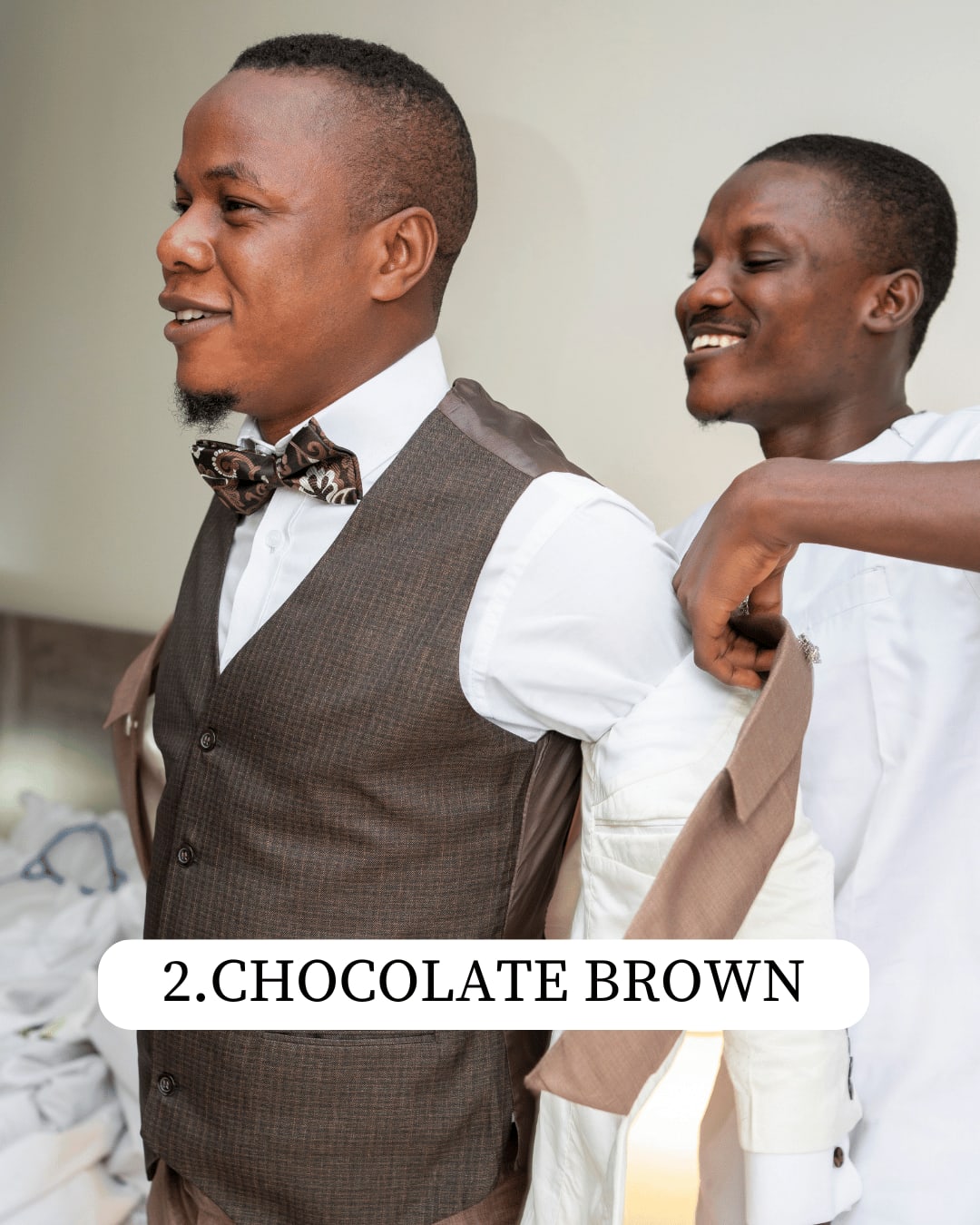
A patterned brown bow tie against a brown waistcoat. Brown is the strongest colour trend in weddings right now because it glows in warm light where black goes flat, and a subtle paisley adds interest without shouting.
Wear with: brown and tan suits, autumn palettes, cream or ivory shirts.
3. Elegance in Black
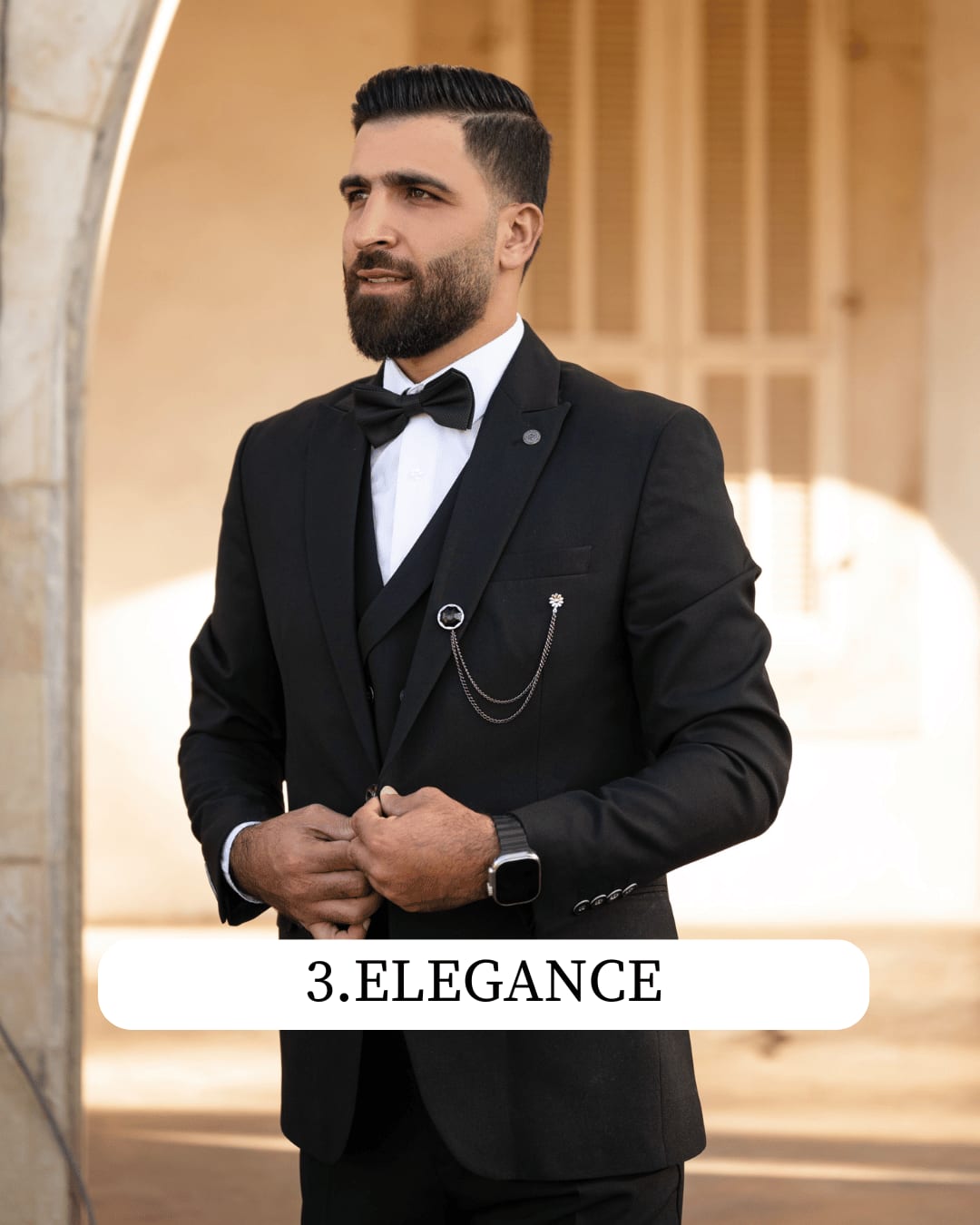
Black bow tie, black three piece, one silver lapel chain. Tonal dressing looks expensive because nothing competes, and a single metallic detail is all the contrast the outfit needs.
Wear with: black three piece suits, evening ceremonies, minimal jewellery and a clean white shirt.
4. Minimalist Black with Braces
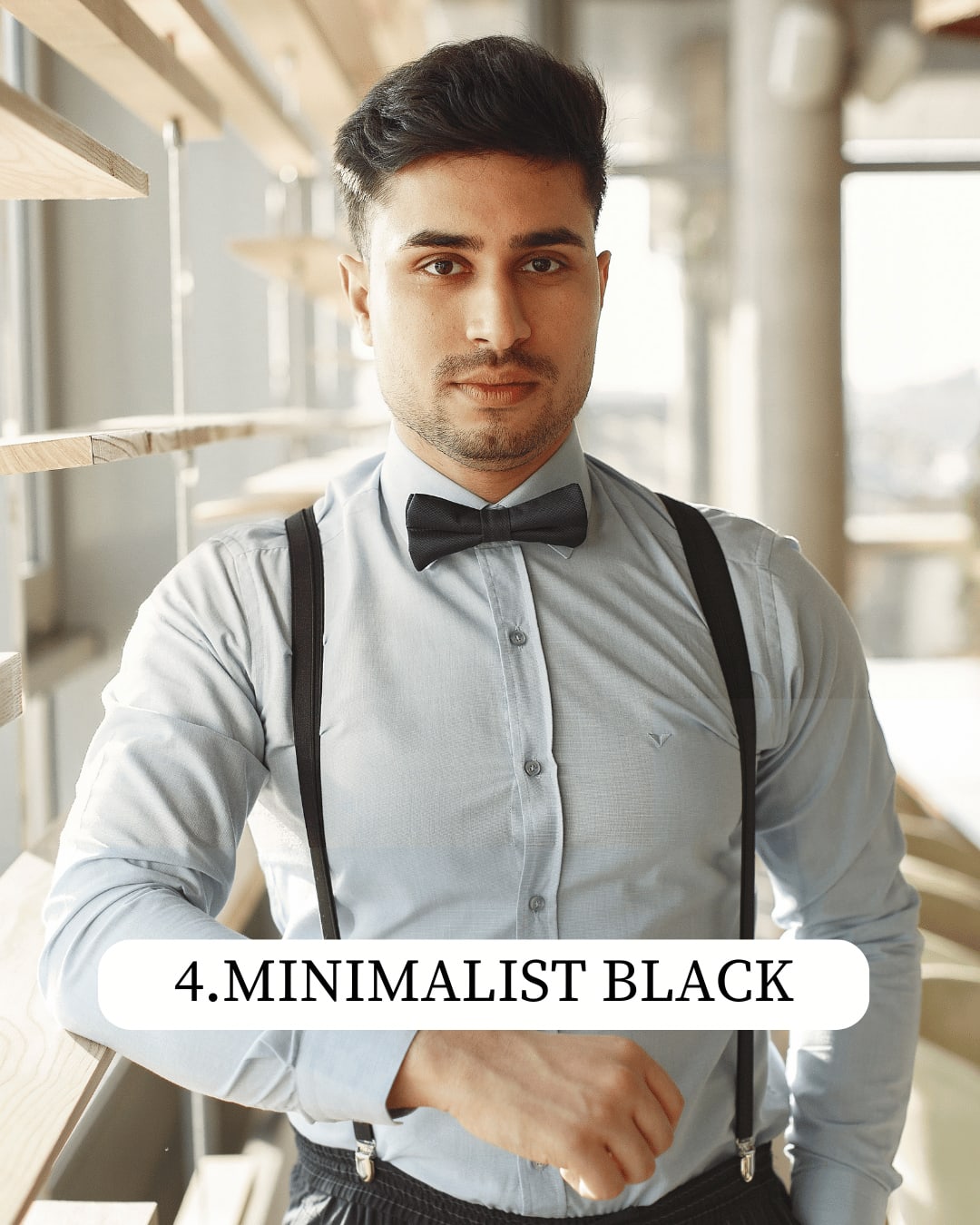
Bow tie and braces with no jacket at all. This is the relaxed end of formal, ideal for the getting ready photographs and for the reception once the jackets come off.
Wear with: pale blue or white shirts, tailored trousers, city hall and daytime weddings.
5. Blue Velvet with Boutonniere
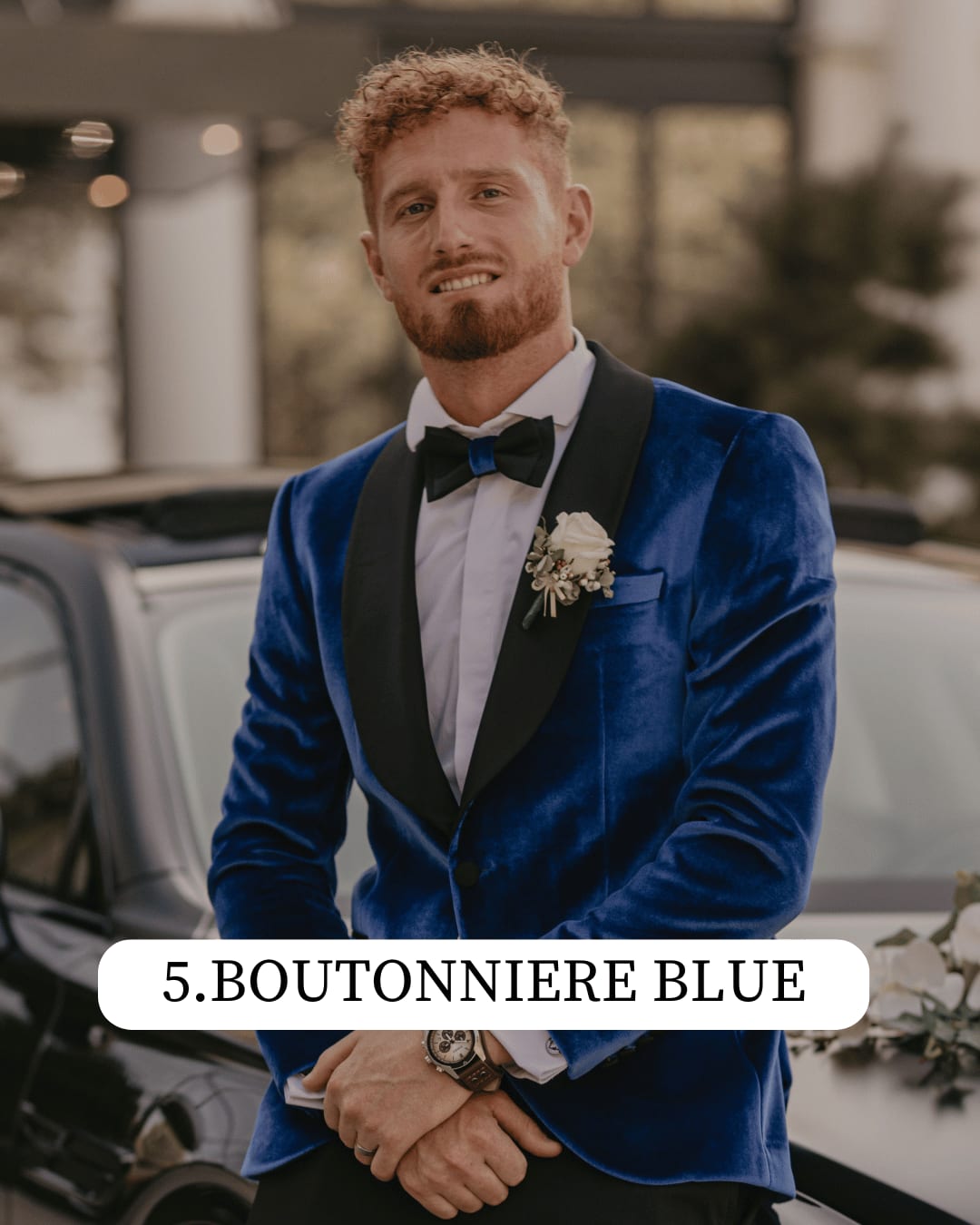
When the jacket is the statement, the bow tie should not be. A plain black bow tie against electric blue velvet keeps the look sharp rather than chaotic, and the white rose ties it back to the bride.
Wear with: velvet and jewel tone jackets, black trousers, black shoes.
6. Floral Crown and Gingham
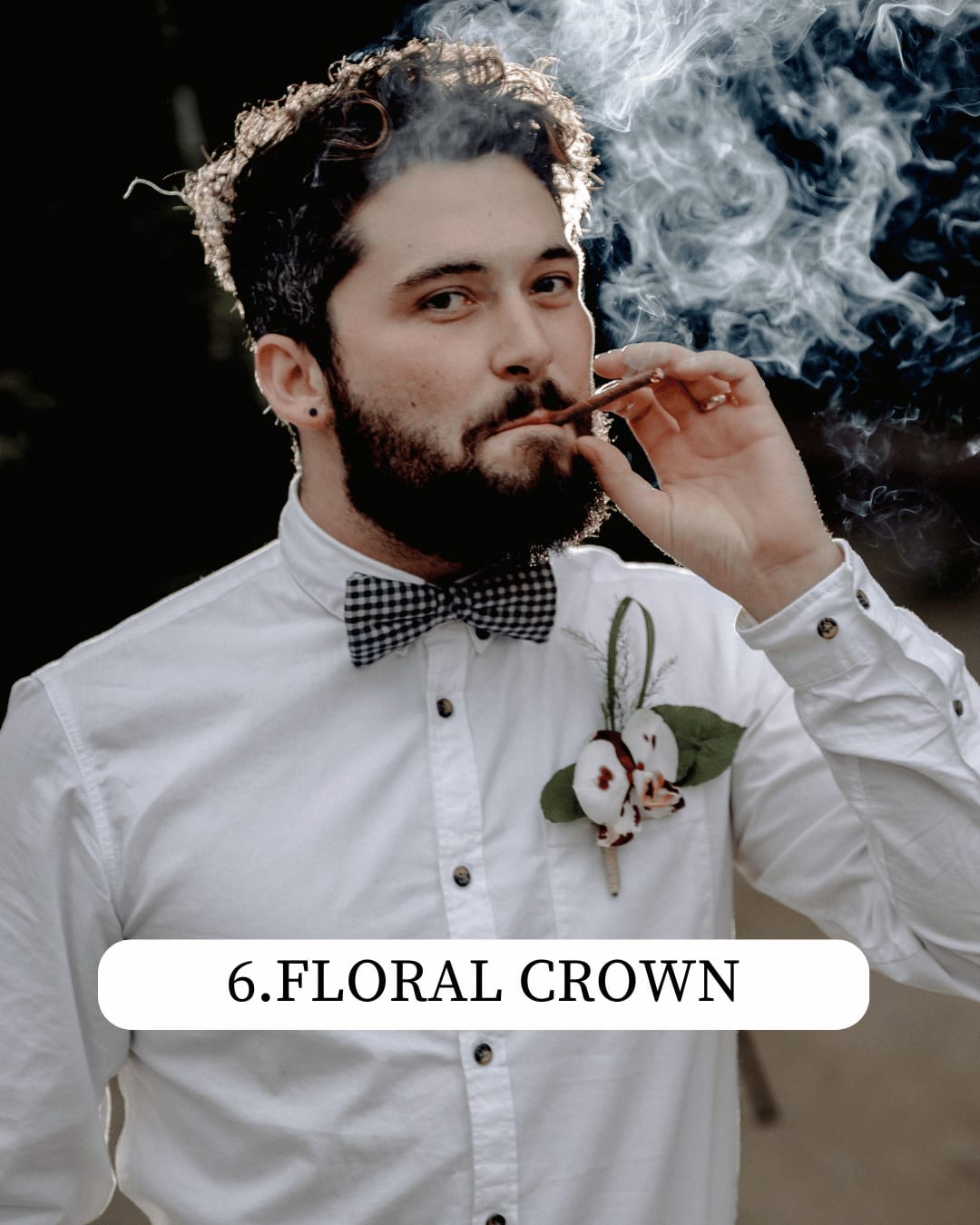
A small checked bow tie with a plain white shirt and no jacket. Pattern in a tiny scale reads as texture from a distance, which is why gingham and micro checks work so well outdoors.
Wear with: boho and festival weddings, linen shirts, relaxed dress codes.
7. Golden Hour Black Tie
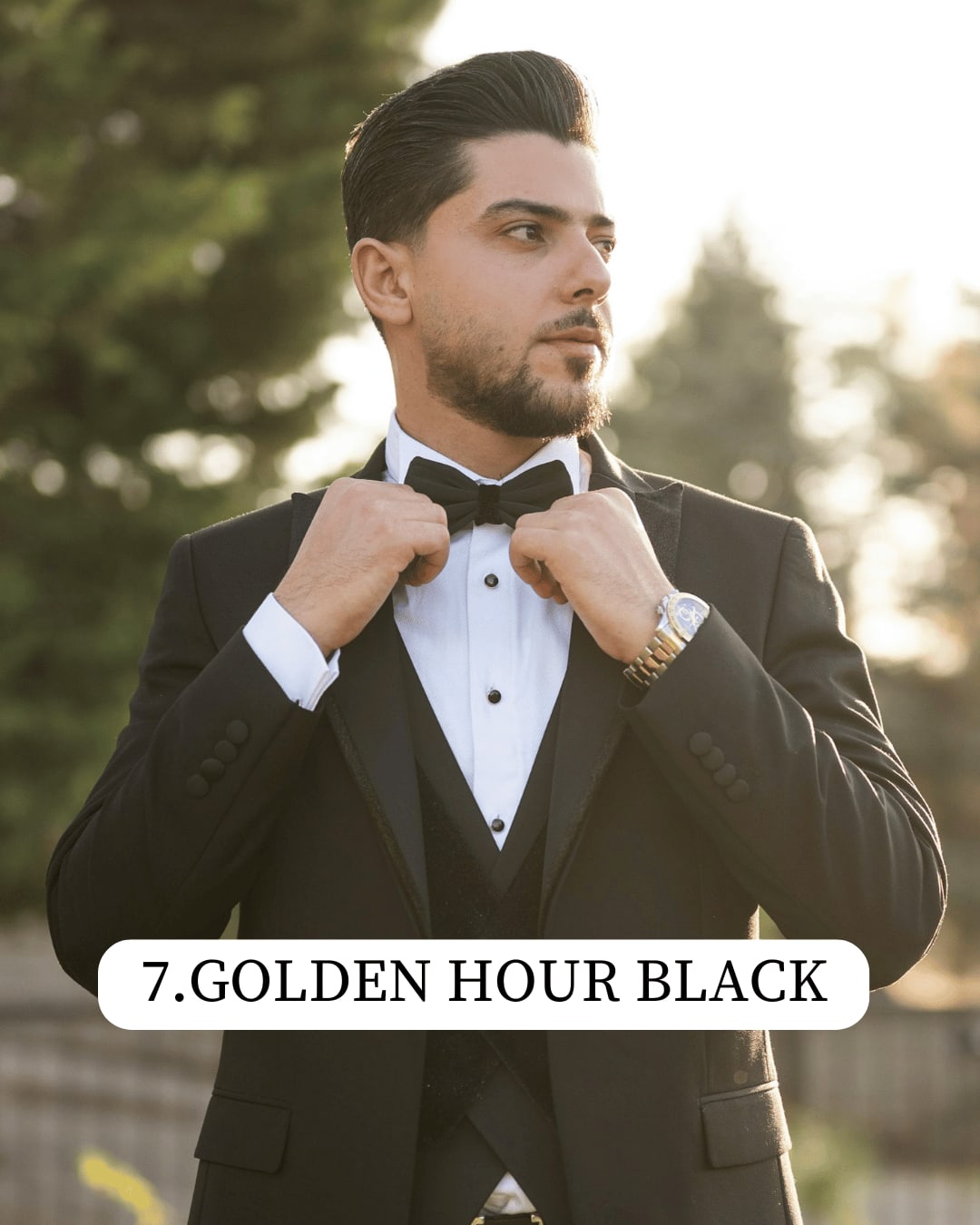
The classic black bow tie photographed in warm evening light. Worth noting for the practical reason that a self tied bow tie has slight asymmetry, and that imperfection is exactly what makes it look real in close photographs.
Wear with: tuxedos with satin lapels, studs rather than buttons, evening ceremonies.
8. Dusty Blue Vest with Floral Tie
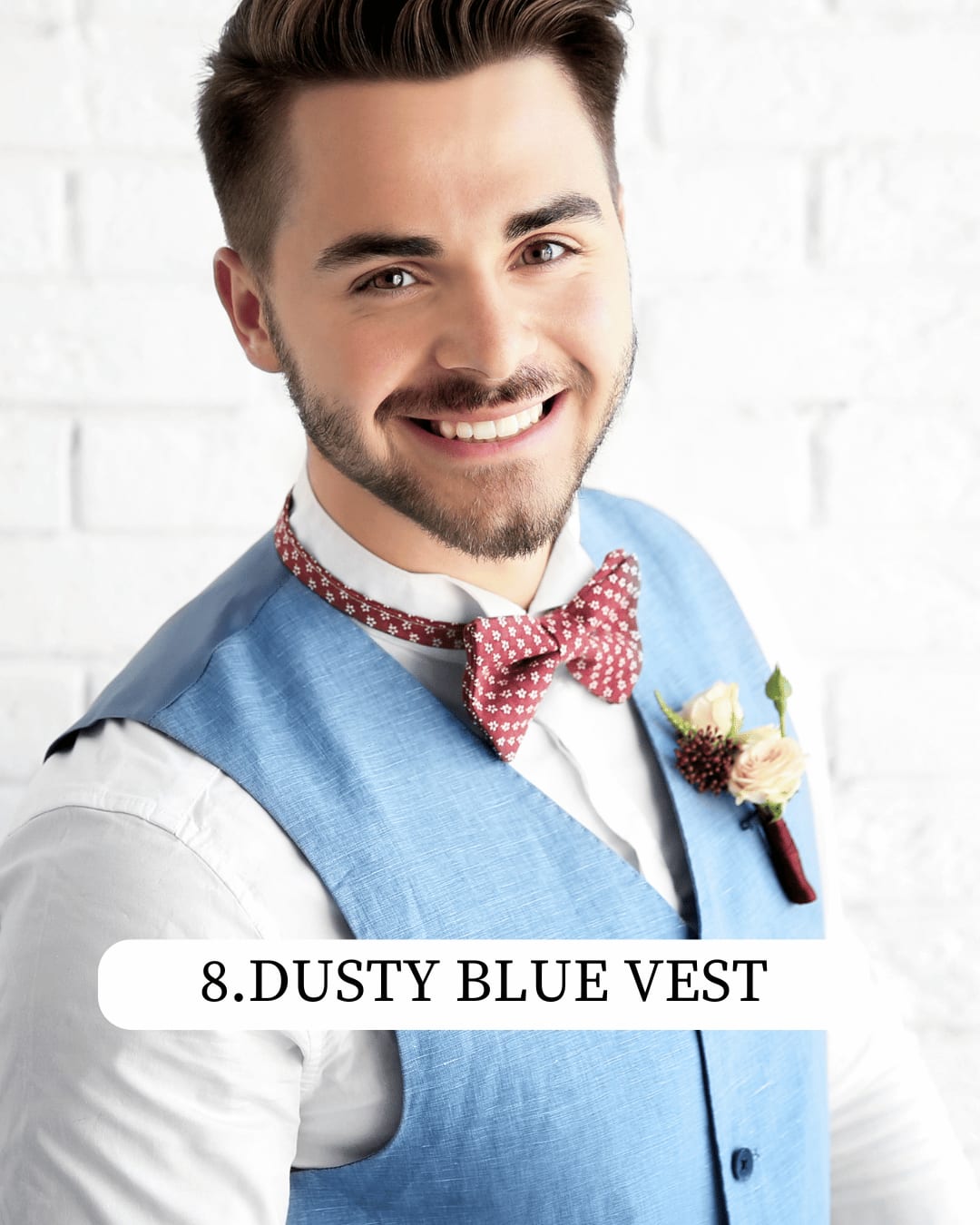
A dusty red floral bow tie against pale blue linen. Complementary colours like blue and warm red do the work here, and matching the bow tie to the boutonniere ribbon pulls the whole look together.
Wear with: spring and summer weddings, linen waistcoats, garden ceremonies.
9. Polka Dot Maroon
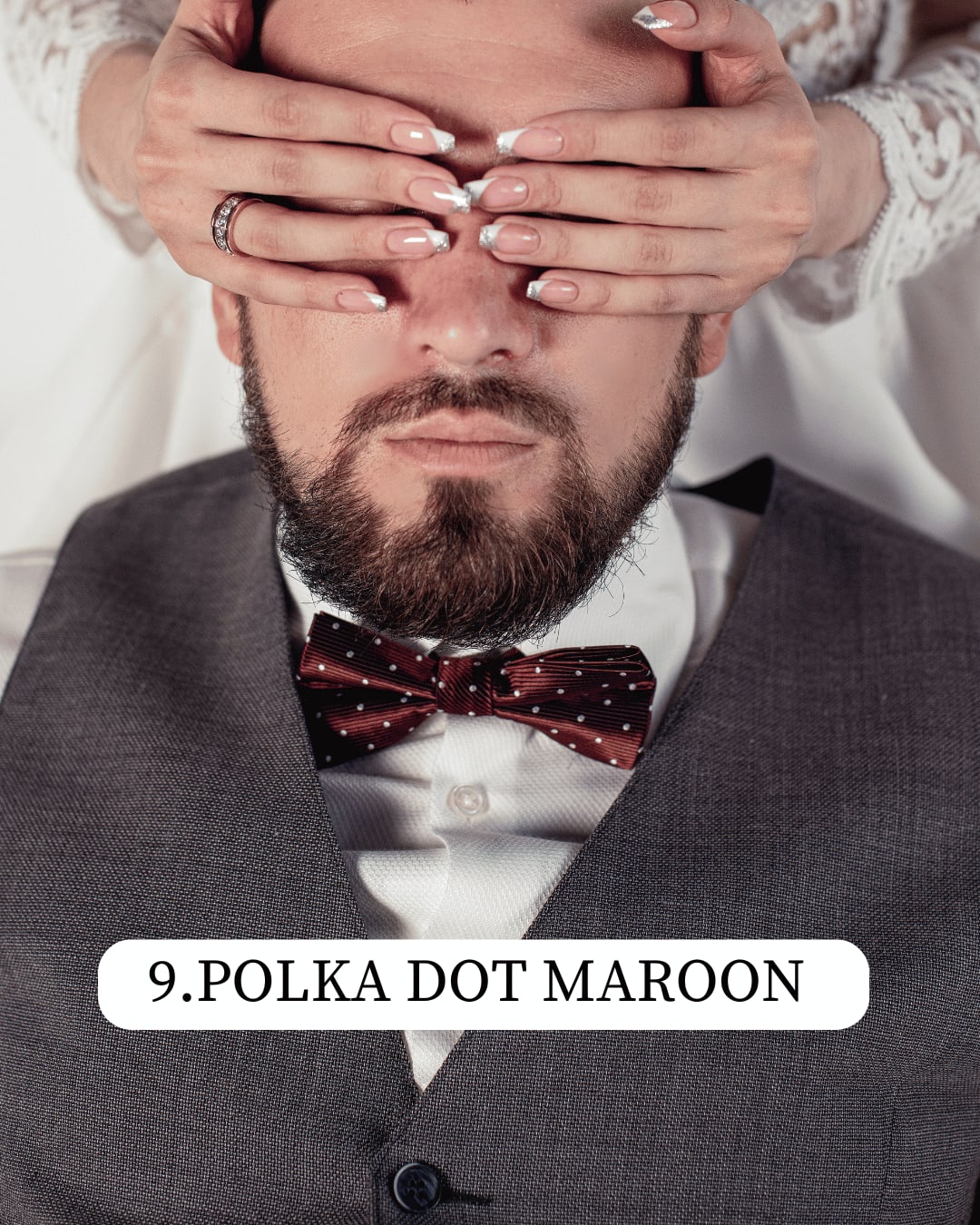
Deep maroon with white dots against grey. Polka dots are the safest pattern in menswear because they are regular and small, so they add personality without ever looking loud.
Wear with: grey and charcoal suits, autumn and winter weddings, white shirts.
10. Burgundy Velvet
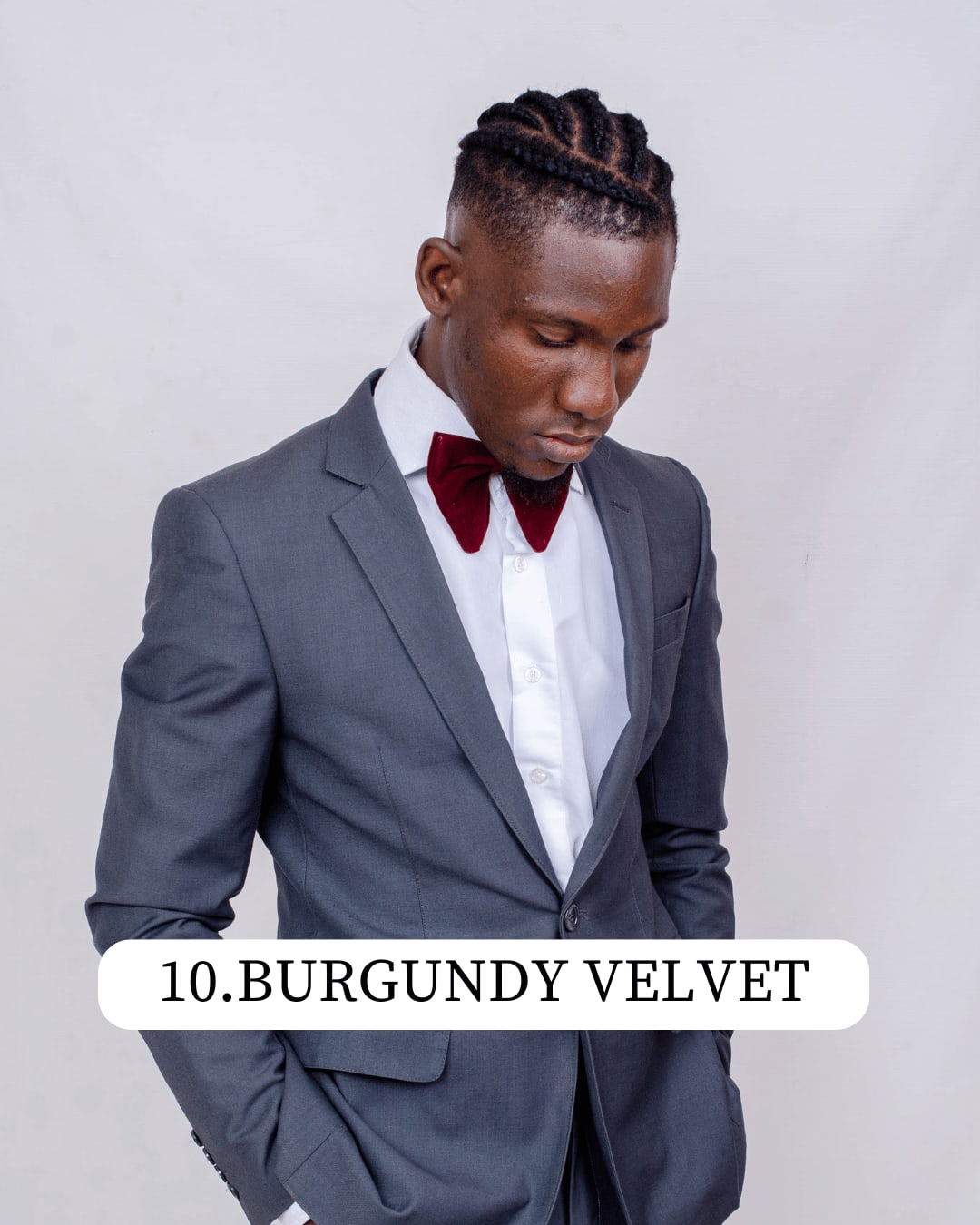
Velvet changes everything. The same burgundy in silk is pleasant, but in velvet it absorbs light and reads as rich and deliberate. Against mid grey it is one of the best value upgrades a groom can make.
Wear with: grey and navy suits, winter weddings, evening receptions.
Choosing the Right Bow Tie
Match the formality, not the colour. Silk and velvet for formal, cotton and linen for outdoor and daytime. A shiny satin bow tie at a garden wedding looks out of place no matter how good the colour is.
Scale it to your face. Broad faces and larger builds suit wider butterfly shapes. Slimmer faces suit a classic or slim batwing. A bow tie should never extend beyond the outer corners of your eyes.
Coordinate with the bride, not the bridesmaids. Take the bow tie colour from the bouquet or the boutonniere rather than trying to match dress fabric exactly, since fabric dyes rarely match across materials.
Give the groom a different one. The simplest way to distinguish the groom in photographs is to give groomsmen one bow tie and the groom another, either in a different fabric or a slightly deeper shade.
Self tie always looks better. Pre tied bow ties look flat and perfectly symmetrical, which reads as fake in close photographs. A self tied bow has slight irregularity and depth. Learn it two weeks ahead and practise in a mirror until it takes you a minute.
Check the collar. A bow tie needs a collar that holds it, ideally a wing collar for black tie or a well structured point collar. A soft unstructured collar lets the bow droop.
Fabric Guide
Silk is the formal standard and holds a crisp knot. Velvet adds richness and depth, best for autumn, winter and evening. Cotton is matte and relaxed, ideal for daytime and outdoor weddings. Linen suits summer and destination weddings and creases as part of its character. Wool works beautifully with tweed and brown suits in cold months.
FAQ
What colour bow tie should the groom wear? Black for black tie, and a colour drawn from the wedding palette for everything else. Burgundy, navy, brown and dusty blue are the most popular non black choices.
Should the groom and groomsmen wear the same bow tie? It is better if they do not. Keep the same colour family but give the groom a different fabric or shade so he stands out in photographs.
Self tie or pre tied? Self tie looks noticeably better in close photographs because of its natural asymmetry. Pre tied is easier and acceptable, especially for groomsmen and younger guests.
How do you tie a bow tie? It is tied exactly like a shoelace, in front of the mirror rather than looking down. Practise a few times in the two weeks before the wedding and it becomes automatic.
Can you wear a bow tie without a jacket? Yes. With braces or a waistcoat it looks intentional and relaxed, which is ideal for daytime, city hall and reception photographs.
What size bow tie should I wear? The bow should not extend past the outer corners of your eyes or beyond the width of your collar. Larger builds suit butterfly shapes, slimmer faces suit batwing or classic.